- Let's Connect
- Posts
- Resource Roundup #5
Resource Roundup #5
Resources for Promoting Effective Smartphone Use and Digital Wellness

Lisa Golds
June 09, 2026
Welcome to Let’s Connect: A newsletter from Dr Lisa Golds, Innovation Fellow at The University of Edinburgh, that brings practitioners up-to-date information about effective parental smartphone use, positive device habits, and digital wellness!
If the parents you work with have ever mentioned feeling guilty about phone use, or you've found yourself unsure how to open that conversation without it feeling judgemental then you're in good company! Smartphones are now deeply embedded in early parenthood, and practitioners are increasingly navigating questions about digital habits without much evidence-based guidance to draw on. This newsletter is here to help with that. Each edition brings together research, resources, and practical insights around parental smartphone use and digital wellness, designed to be useful in your everyday work with families, and empowering parents to foster positive device habits for themselves and their newborn babies.
In this round up, I have brought together a number of resources, including open access research focused on parents’ smartphone use around their babies, a report on Scottish fathers’ experiences of parenting, including tech use, and a new digital wellness research study currently open to parents in the UK.
If you would like to contact me for a chat, or to share any resources in the next newsletter - please do get in touch!
✉️ Email: [email protected]
🖥️ LinkedIn: https://www.linkedin.com/in/lisa-golds/

Pilot study evidence suggests that mother–infant dyads respond differently to technoference following phone calls and text messages Our recent study from the University of Edinburgh suggests that the type of smartphone use during mother-infant interactions may matter as much as the use itself, and that texting may be more disruptive to the mother-infant relationship than making or receiving a phone call. The study observed 46 mother-infant pairs in Scotland, where infants were aged between 3-6 months. Using a structured observation method, we compared how mothers and infants interacted during free play together, after a phone call, and after a period of texting. Following both types of phone use, mothers and infants showed more shared negative emotions and less shared positive engagement compared to free play. However, the effects were notably stronger after texting than after a phone call. These findings have practical implications for practitioners supporting new mothers. Rather than advising mothers to avoid smartphone use altogether, guidance could focus on how they use their phones around their babies, suggesting that sending voice notes or making a voice call may be less likely to disrupt the emotional connection between a mother and her infant than scrolling or texting. This kind of specific, non-judgmental guidance may be more useful and more achievable for families than blanket messages about reducing screen time. |  This article is open access |
Objective vs. perceived maternal smartphone use and observed mother-infant interaction quality Similarly, this study from a group of international researchers suggests that how mothers feel about their smartphone use may matter more for mother-infant relationship quality than how much they actually use their phones. The study followed 147 mothers and their two-month-old infants, tracking both objective smartphone use and mothers' own perceptions of their use, before observing mother-infant feeding interactions. Mothers who reported feeling empowered by their smartphone use, for example, feeling more confident in their parenting or better supported, had higher quality interactions with their infants during feeding. These results suggest that rather than focusing solely on reducing phone use, supporting mothers to reflect on how their smartphones fit into their caregiving, and helping them use their phones in ways that feel purposeful and empowering, may be a more helpful approach. | 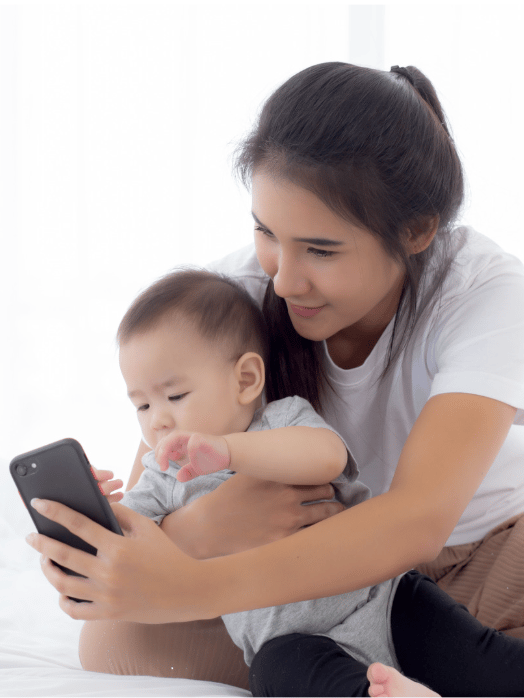 This article is open access |


This section highlights useful resources relevant to practice and research in digital wellness and parenting. This edition features a report exploring Scottish fathers' experiences of parenting (including their relationship with technology), and a newly developed scale measuring Parent Phone Use Regulation Efficacy, which could be a handy tool for assessing parental confidence in managing their own device use.
Each year, Fathers Network Scotland, release results from their Dads Survey - a comprehensive exploration of dads’ parenting experiences across Scotland. In 2025, a total of 440 dads from across Scotland shared their experiences of becoming a dad, and the results are now live. Questions specifically targeting digital use found that mobile phones frequently interrupt the time dads spend with their infant in the first year, with 31% of dads reporting frequent interruptions from digital devices. Read the full report here |  |
Leading researchers in digital wellbeing have developed the Parent Phone Use Regulation Efficacy Scale (P-PURE), a tool designed to measure how confident parents feel in managing their smartphone use around their children. The scale captures two key elements; the ability to use a phone intentionally and the ability to stop use, and has been validated with over 450 parents, showing strong links with mindfulness, self-regulation, and reduced problematic phone use. It's a promising tool for both research and practice, with potential to support targeted interventions for parents. |  |


 | A spot of shameless self-promotion in the events section, as I am currently recruiting parents to take part in a new digital relaxation project with the University of Edinburgh. If you are, or know, a parent living in the UK, with an infant under 6 months old, we would love to have them on board! |

Please spread the word if you think that colleagues would benefit from the resources shared in this newsletter:
Or subscribe to our newsletter here: